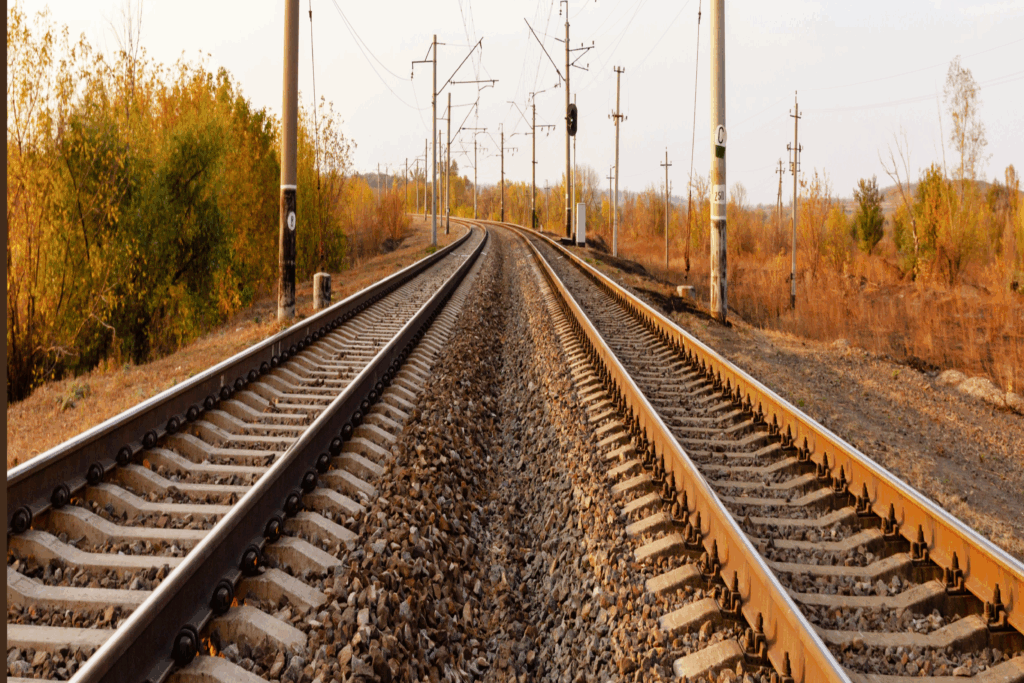
The Parallel Tracks Problem
My recent research into the impact of the Portrait of a Graduate didn’t yield too many surprises. As I had found in my earlier work with districts, having a portrait and living the Portrait aren’t mutually inclusive.
The best description of this incongruence came from one of the study participants. When I asked this leader how their Portrait of a Graduate connected to curriculum and assessment, she paused and then said this: the Portrait and the curriculum run on “parallel tracks that only occasionally intersect.”
That image has stayed with me—because I’ve seen it everywhere since.
What Parallel Tracks Actually Look Like
Maybe you recognize this: A district has invested real time and energy in developing a Portrait of a Graduate. There’s genuine enthusiasm. The competencies are posted in the lobby, referenced in the strategic plan, maybe even printed on student planners.
And yet.
Students complete a senior capstone demonstrating collaboration and critical thinking—skills they were never systematically taught in their daily coursework. A rubric for communication skills exists somewhere in a shared drive, but no one’s quite sure who uses it. The report card still speaks entirely in content-area grades while the Portrait hangs on the wall behind the guidance counselor’s desk.
The Portrait and the curriculum. Running parallel. Occasionally intersecting—in a pilot program here, an enthusiastic teacher there—but never truly woven together.
The Cost of Parallel Tracks
This creates real confusion. Students learn to navigate two systems that don’t talk to each other: one that tells them what we say we value, another that determines what actually counts. Teachers who genuinely want to develop these competencies can’t figure out where the work fits—or whether anyone will notice if they do it.
One superintendent in our study put it bluntly: Students are “so successful in those areas” of the Portrait, but everything we grade and report is solely about progress in content knowledge and skills. “We are in storytelling mode [regarding the Portrait competencies,” she said, “and we’ve got to get beyond that.”
A Coherence Crisis
The more districts I talk with since the research study, the more I see this as a coherence crisis. It’s not a lack of vision—most districts have plenty of that. It’s not a lack of effort—I’ve watched dedicated leaders pour themselves into this work. But it does appear to be a fundamental misalignment between what we aspire to and how our systems actually operate.
The Portrait says one thing. The gradebook says another. The state test says something else entirely. And in that gap, the Portrait becomes aspirational rather than operational.
What I’m Trying to Understand
I don’t have a tidy answer to this. What I have are more questions—and a genuine desire to learn from districts that are finding ways to merge these tracks.
If you’re working on Portrait of a Graduate implementation, I’d value hearing from you:
- Where are you seeing the parallel tracks problem show up in your district?
- Have you found ways to make Portrait competencies consequential—not just visible, but actually embedded in what gets taught and assessed?
- What’s getting in the way?
I’m conducting market research conversations with district leaders who are navigating this work. These aren’t sales calls—I’m gathering insights to understand the realities on the ground and to build more meaningful support for this work.
If you’re open to a 30-minute conversation, please contact me, and I’ll share a scheduling link. And please feel free to pass this along to others doing this work.
The question I keep returning to: If Portraits of a Graduate are going to be more than posters on the wall, what will it actually take to merge the tracks?